

Electric Scooter Law UK 2026: Where Can You Ride?
In this article
- Private vs Rental vs E-Bike: The Rules at a Glance
- Why Private E-Scooters Are Illegal in Public
- Where You Can Legally Ride a Private E-Scooter
- Rental E-Scooter Trials: How They Work
- Penalties If You Ride on Public Land
- Wales, Cardiff, Scotland and Northern Ireland
- Is the Law Changing? What's Actually Been Said
- Buying an E-Scooter for Private Land: What to Check
- Charging and Storing It Safely at Home
- Want Something Road-Legal Today?
- FAQ
Short answer
In the UK, a privately owned e-scooter is only legal on private land, with the landowner's permission. Riding one on a public road, pavement, cycle lane or any other public place is illegal, because it is treated as a motor vehicle that cannot be insured. The only e-scooters you can legally ride in public are rental e-scooters in official trial areas in England, which run until May 2028.
Why a shop that sells e-scooters is telling you this: we sell e-scooters for private-land use, and we would rather you buy one knowing exactly where you can ride it than find out from a police officer. Everything below is based on current GOV.UK guidance and police enforcement guidance as of October 2026.
Private vs Rental vs E-Bike: The Rules at a Glance
Most of the confusion comes from people seeing rental e-scooters on the road and assuming their own scooter is covered by the same rules. It isn’t. Here is how the three options compare:
| Private e-scooter | Rental e-scooter (trial) | Road-legal e-bike (EAPC) | |
|---|---|---|---|
| Public roads | Illegal | Yes, in trial areas (not motorways) | Yes |
| Cycle lanes | Illegal | Yes, in trial areas | Yes |
| Pavements | Illegal | Illegal | Illegal |
| Private land | Yes, with the landowner’s permission | Only where the operator allows | Yes |
| Driving licence | Not possible to ride legally in public | Full or provisional, category Q | Not needed |
| Insurance | Not available for public use | Provided by the operator | Not required |
| Speed limit | — | 15.5 mph | Motor cuts out at 15.5 mph |
| Minimum age | — | Set by licence rules and the operator | 14 |
Why Private E-Scooters Are Illegal in Public
Under the Road Traffic Act 1988, an e-scooter counts as a powered transporter, which the law treats as a motor vehicle. A motor vehicle used on a road or in another public place needs third-party insurance, a driving licence with the right entitlement, registration and tax, and it has to meet construction and lighting standards.
A privately bought e-scooter can’t meet those requirements, and no insurer offers road cover for one. That is the whole reason it is illegal: not because a specific “e-scooter ban” exists, but because the scooter can never be legally insured or licensed for public use. GOV.UK puts it plainly: “It is against the law to use a privately owned electric scooter on public land.”
This applies regardless of power or speed. A small 350W scooter limited to 15.5 mph is treated the same as a 2,400W dual-motor model. Low speed does not make it legal.
Where You Can Legally Ride a Private E-Scooter
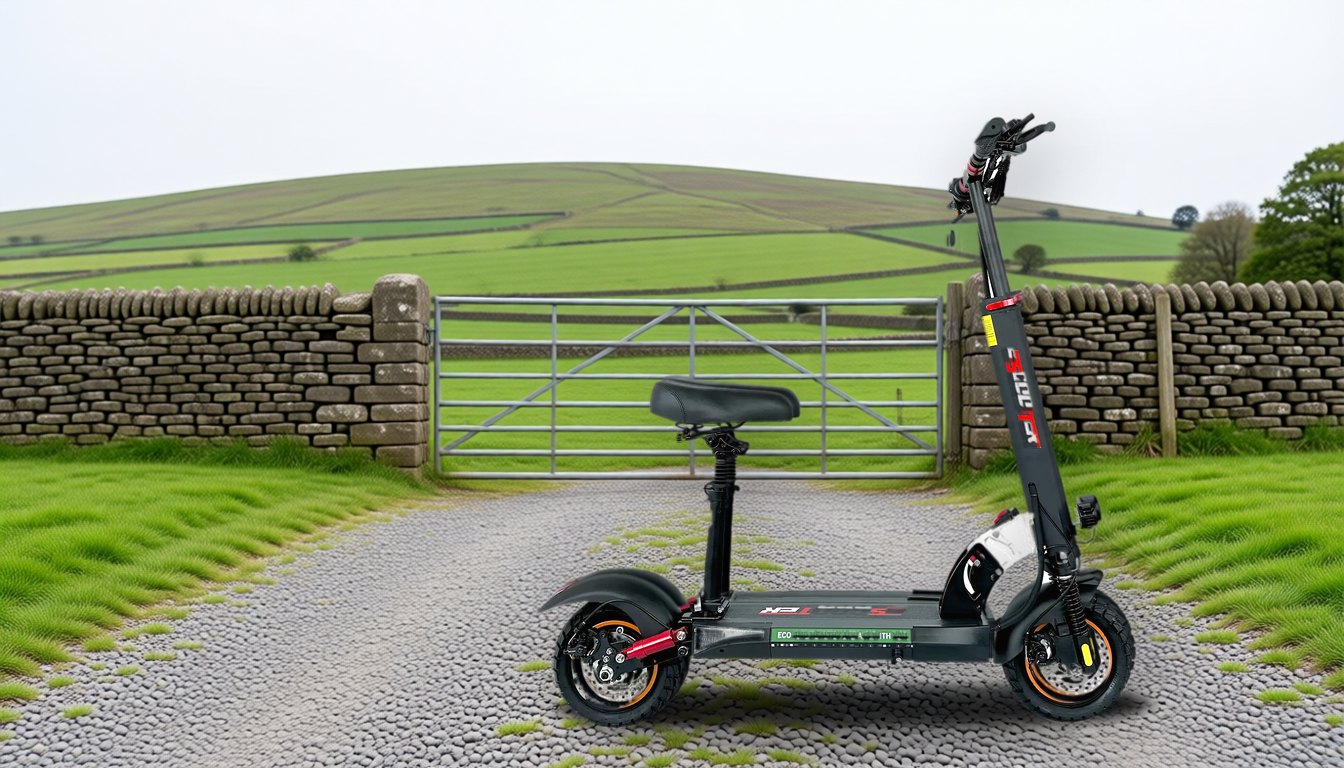
You can ride your own e-scooter on private land, as long as the landowner has given permission. In practice, that means places like:
- Your own land: a private driveway, garden or yard that you own or rent.
- Someone else’s land, with consent: a farm, estate, private track or field where the owner has said yes.
- Private venues: some tracks and private sites allow e-scooters on their own terms. Check before you go.
Watch out for “private” land that the public can use. Supermarket car parks, retail parks, shared estate roads and similar places are usually privately owned, but if the public has access, they can count as a “public place” in law. Riding there carries the same risk as riding on the road. If the general public can walk or drive in freely, don’t assume it’s private land for e-scooter purposes.
Rental E-Scooter Trials: How They Work
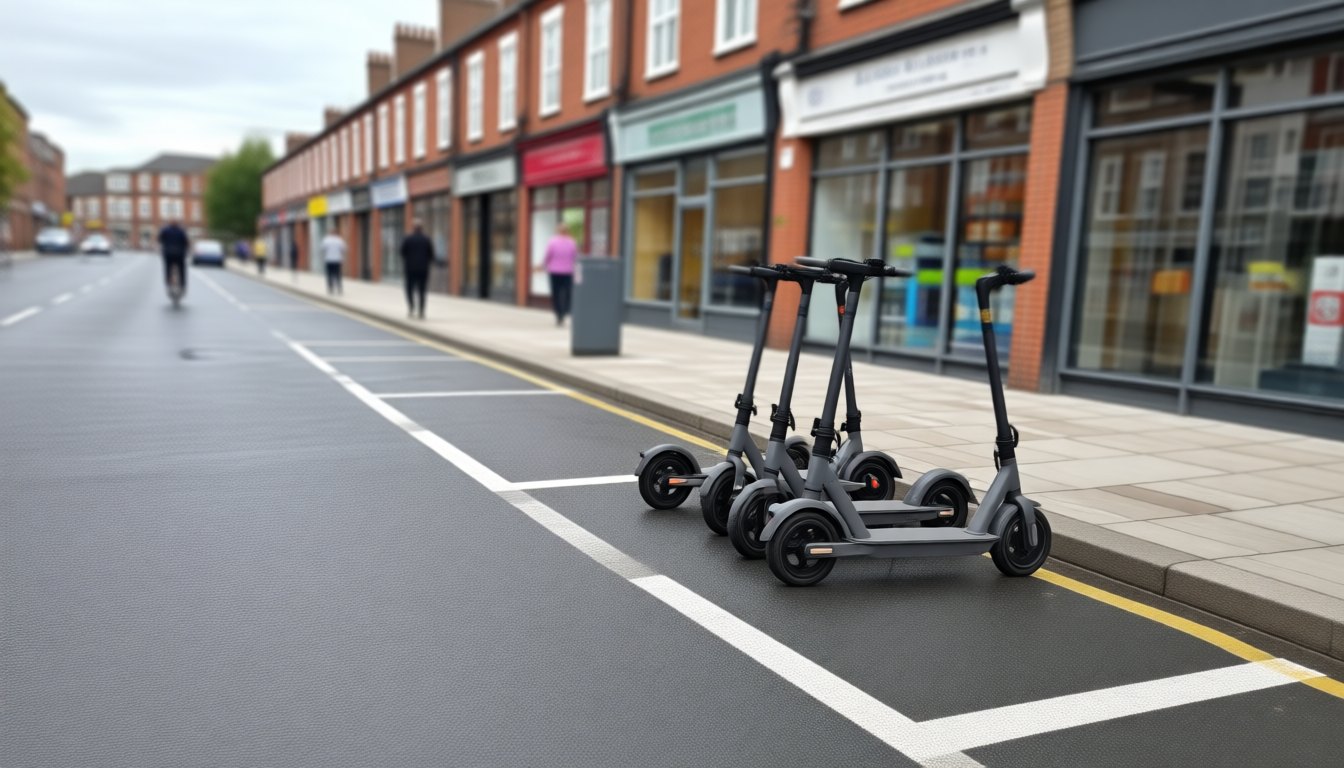
Since July 2020, the Department for Transport has run trials of rental e-scooters in selected areas of England. In July 2025 the trials were extended for a fifth time and are now due to end in May 2028. The aim is to gather evidence on safety and on how e-scooters fit into towns before any permanent law is written.
The trial rules, from GOV.UK guidance:
- Licence: you need a full or provisional UK driving licence with category Q entitlement. In practice that means riders are 16 or over, and many operators set their own minimum age of 18.
- Where: roads (except motorways) and cycle lanes inside the trial area. Never on the pavement.
- Speed: trial e-scooters are limited to 15.5 mph, with a motor of no more than 500W continuous power, and they weigh no more than 55 kg.
- Insurance: provided by the rental operator.
- Rider rules: one person only, no phone use while riding, and the same drink and drug rules as for driving.
- Helmets: recommended but not a legal requirement.
Trial areas include parts of London, Birmingham, Bristol, Leeds, Cambridge, Norwich and others. The list changes as trials open and close, so check GOV.UK for the current areas. The key point: these rules only cover the rental scooters themselves. Riding your own scooter in a trial area is still illegal.
Penalties If You Ride on Public Land
Police enforcement varies by area, but the penalties are real and they land on your driving licence. The typical outcomes, as set out in police road-safety guidance:
| Offence | Typical penalty |
|---|---|
| No insurance | £300 fixed penalty and 6 penalty points |
| No correct licence | £100 fixed penalty and 3–6 penalty points |
| Riding on the pavement | Fixed penalty notice, possible £50 fine |
| Using it with no insurance | The scooter can be seized under section 165 of the Road Traffic Act 1988 |
| Riding in an antisocial manner | The scooter can be seized under section 59 of the Police Reform Act 2002 |
Six points for no insurance is the same endorsement a car driver gets for driving uninsured, and it can affect what you pay for car insurance afterwards. If a seized scooter is released at all, storage and recovery fees apply. More serious cases, such as dangerous riding, drink riding or a collision, go to court.
Wales, Cardiff, Scotland and Northern Ireland
E-scooter law is a reserved matter, decided at Westminster, so the rule on private scooters is the same everywhere in Great Britain: private land only. Northern Ireland has its own road traffic law, but the position is the same: private e-scooters are illegal on public roads and paths there too.
The difference is the rental trials. They only run in England. Wales has never taken part, so there is no legal way to ride any e-scooter, private or rental, on public land in Cardiff or anywhere else in Wales. The same applies in Scotland and Northern Ireland.
Is the Law Changing? What’s Actually Been Said
In February 2026, Transport Secretary Heidi Alexander told the BBC that “the genie’s out of the bottle” on e-scooters. She acknowledged that people are already riding private scooters, and said the government plans new laws setting out where private e-scooters can be used, with rules on speed limits and safety equipment such as lights and working brakes. She was clear that e-scooters should never be allowed on pavements. The changes would come “as soon as parliamentary time becomes available”.
That is a statement of intent, not a law. As of October 2026:
- No legislation legalising private e-scooters has been passed, and no date has been set.
- The rental trials run until May 2028 to gather more evidence, which suggests permanent rules may not arrive much sooner.
- Nobody knows yet what the technical limits will be. The trial vehicles give a hint: 15.5 mph and 500W.
Our honest advice: don’t buy an e-scooter on the assumption that it will become road-legal. If future rules follow the trial spec, a 50 km/h (31 mph) dual-motor scooter is unlikely to qualify without being restricted, and there is no guarantee any current model will. Buy one for where you can ride it today: private land.
Buying an E-Scooter for Private Land: What to Check
If you have the space to ride on private land, such as a farm, an estate, a long private drive or a site you have permission to use, the right scooter depends on the ground and on the rider. These are the specs that matter most:
- Tyres: 10″ off-road tyres cope with gravel and grass far better than small solid or honeycomb tyres.
- Brakes: disc brakes are the minimum for anything over 25 km/h.
- Maximum load: check it covers the rider plus anything carried, with some margin.
- IP rating: IP54/IP55 handles splashes and light rain, not submersion or jet-washing.
- Weight: a 28 kg dual-motor scooter is hard to lift into a car boot or carry up steps.
- Charge time and where you’ll charge it: see the safety section below.
Our current range, for private-land use:
| Model | Motor | Top speed | Battery | Max load | Weight |
|---|---|---|---|---|---|
| V8 | 350W | 25 km/h | 36V 7.8Ah | 120 kg | 12.5 kg |
| V10 PRO | 500W | 25–30 km/h | 36V 10.5Ah | 150 kg | — |
| L10 / L10 PRO | 800W | 40–45 km/h | 48V 13/16Ah | 120 kg | 21 kg |
| L12 / L12 MAX | 800W | 45 km/h | 48V 13/16Ah | 150 kg | 22 kg |
| M4 PRO | 800W | 45 km/h | 48V 16Ah | 150 kg | 22 kg |
| X4 | 2 × 800W | 50 km/h | 48V 18Ah | 150 kg | 26 kg |
| X6 PRO | 2 × 1200W | 50–55 km/h | 48V 21Ah | 150 kg | 28 kg |
Specs are taken from each product page. A dash means the figure isn’t listed; ask us before you buy if it matters to you.
Charging and Storing It Safely at Home
Lithium-ion batteries in e-scooters and e-bikes are safe when they’re looked after, but a damaged pack or the wrong charger can cause a fire. This is also why TfL has banned privately owned e-scooters from its trains, buses and stations since December 2021. The basics:
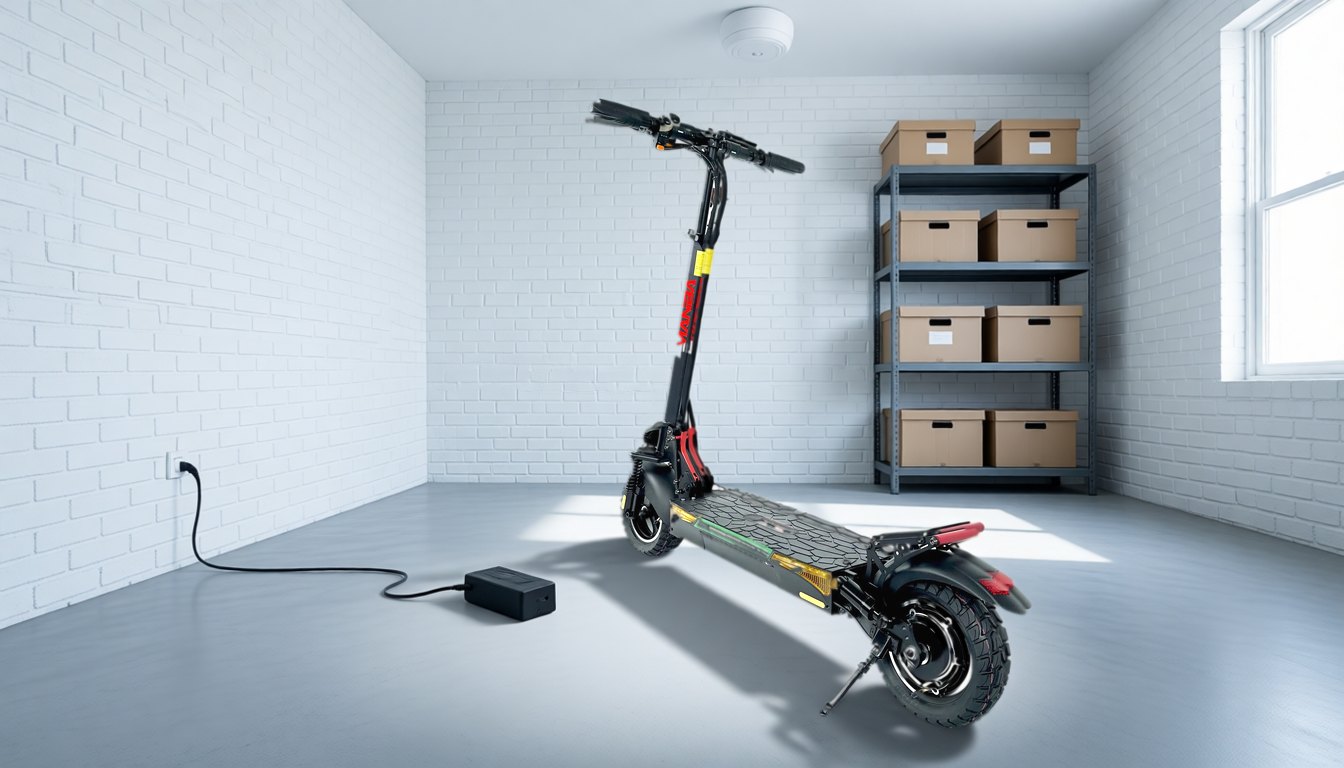
- Charger: use the original, or a matched replacement with the right voltage and connector.
- Timing: don’t charge overnight or while you’re out, and unplug it once it’s full.
- Where: on a hard floor away from anything flammable, with a working smoke alarm nearby, and never in a hallway or on your only way out.
- Temperature: let the battery cool after a ride before you plug it in, and don’t charge it below freezing.
- Warning signs: stop using it if the pack is swollen, cracked, smells of burning or gets unusually hot.
Most of this applies to e-bikes too. Our guide to charging a lithium battery safely goes into more detail.
Want Something Road-Legal Today?
If what you actually need is a legal way to get around town now, the answer is an electrically assisted pedal cycle (EAPC): an e-bike with a motor of no more than 250W that only helps while you pedal and cuts out at 15.5 mph. You don’t need a licence, insurance, registration or tax, and you can ride it from age 14 on roads and cycle lanes.
You don’t have to buy a new e-bike to get one. A 250W conversion kit turns the bike you already own into a road-legal e-bike. Our guide Is an eBike Conversion Kit Legal in the UK? covers the exact conditions, and we explain the throttle rules separately in Throttle E-Bikes and UK Law.
FAQ
Are electric scooters legal in the UK?
Buying and owning one is legal. Riding a privately owned e-scooter is only legal on private land with the landowner’s permission. In public, only rental e-scooters in official trial areas in England can be ridden legally, and those trials run until May 2028.
Can I ride my e-scooter on the pavement or in a cycle lane?
No. A private e-scooter is illegal on pavements, cycle lanes and roads. Even rental trial scooters are banned from pavements; they may only use roads and cycle lanes inside the trial area.
Can I insure my private e-scooter so I can ride it on the road?
No. There is currently no insurance product that makes a private e-scooter legal on public roads, which is the main reason riding one there is illegal. Some policies cover a scooter against theft or damage at home, but that is not road cover.
Are e-scooters legal in Cardiff or anywhere in Wales?
Only on private land. Wales has never been part of the rental trials, so there is no legal way to ride any e-scooter, private or rental, on public land in Cardiff or elsewhere in Wales.
When will private e-scooters become legal?
There is no date. In February 2026 the Transport Secretary said the government plans to legalise them with rules on speed, lights and brakes, “as soon as parliamentary time becomes available”, but no law has been passed. The rental trials have been extended to May 2028.
Can I ride my e-scooter in a supermarket car park?
Don’t. Although the land is privately owned, car parks the public can freely access can count as a “public place” in law, so the same insurance and licence rules apply as on the road.
What happens if the police stop me on a private e-scooter?
Typically a £300 fixed penalty and six points on your licence for no insurance, possibly further points for not holding the right licence, and the scooter can be seized. Riding on the pavement or in an antisocial way adds further penalties.
Is an e-scooter with a seat legal?
No. Adding a seat doesn’t change its legal status: a private seated e-scooter is still a motor vehicle that can’t be insured for public use, so it is also private-land only.
Not sure which scooter suits the land you have, or whether an e-bike conversion would suit you better? Message George on WhatsApp and we’ll give you a straight answer.