

Thinking of Derestricting a Bafang Kit You Already Own? Read This First
In this article
- The Request We Get, and Why It Usually Comes Up
- What Actually Changes When a Kit Is Derestricted
- The Part Most Riders Don't Know: Controllers Keep a Record
- What UK Cycle Insurers Actually Say About This
- Our Actual Policy When Asked to Derestrict a Road Bike
- The Legitimate Route: A Genuinely Separate Off-Road Build
- Myths We Hear That Aren't True
- FAQ
Short answer
We won't derestrict a bike that stays on the road. Derestricting it reclassifies it as a motor vehicle, controllers retain the settings they were configured with, and insurance policies are written around EAPC-compliant bikes. For off-road use, a separate purpose-built machine is the sensible route.
About this guide: This is a genuinely common request at our counter, more often than you’d expect from riders who already have a perfectly good, legal build. This is our honest answer, and our actual policy when asked.
The Request We Get, and Why It Usually Comes Up
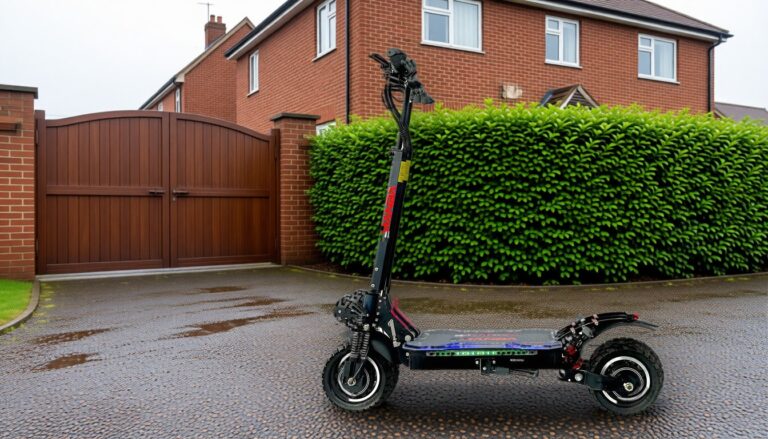
It’s rarely someone planning outright illegal riding. Usually it’s a rider who’s had their BBS02B or BBSHD for a year or two, has got used to how strong it feels, and has heard from a friend or a forum that “you can just unlock the extra power.” What they’re often not thinking through is that this isn’t a cosmetic setting — it’s the difference between a bicycle and a motor vehicle in the eyes of the law, for a bike that’s about to go straight back onto the same commute it’s always done.
What Actually Changes When a Kit Is Derestricted
Removing the 250W/15.5 mph programming doesn’t upgrade the bike — it reclassifies it. The exact same physical motor that was a legal EAPC five minutes earlier is now, in law, a motor vehicle requiring type approval, registration, insurance, and an appropriate licence to use on a road. None of that changes because the alteration is “just software.”
The Part Most Riders Don’t Know: Controllers Keep a Record
This is the detail that surprises most people who ask us about this: Bafang controllers and displays retain their configured parameters, and in the event of an accident or a police stop, those settings are exactly what gets checked. “It’s easy to switch back” isn’t the protection people assume it is — a bike examined immediately after an incident is examined in whatever state it was actually being ridden in at the time, not in whatever state you’d prefer it to be found in afterwards. This is different from simply having the physical capability to go faster; it’s a matter of what the controller was actually configured to do when the bike was on the road.
What UK Cycle Insurers Actually Say About This
Specialist UK cycle and eBike insurance policies — from providers like Bikmo, Yellow Jersey, and similar — are written around EAPC-compliant bikes, and typically define what they’ll cover accordingly. A bike that doesn’t meet EAPC specification at the time of an incident sits outside the definition most of these policies are built on. This applies even if you have a policy, have declared the bike, and have been paying premiums — a claim can still be assessed against the bike’s actual configuration at the time of the incident, not its configuration when the policy was taken out.
The practical risk isn’t getting stopped — it’s what happens after a collision. If you injure someone or damage property while riding a derestricted bike on a public road, you may be defending that claim personally, with no insurer standing behind you, regardless of what cover you thought you had.
Our Actual Policy When Asked to Derestrict a Road Bike
-
We ask what the bike is actually used for
If it’s your daily commuter and it’s staying that way, we won’t derestrict it — not out of caution for its own sake, but because we don’t think it’s a good trade for you.
-
For genuine off-road or private-land use, we ask for that in writing
A short written confirmation that the bike will be used on private land only, before we make any change — this protects you as much as it protects us.
-
We won’t set up a “switchable” dual-mode configuration for road use
Some riders ask for a config they can toggle between road-legal and derestricted. We don’t do this for bikes used on the road, for the reasons above — the bike is either compliant when it’s ridden on a road, or it isn’t, and a toggle doesn’t change that.
The Legitimate Route: A Genuinely Separate Off-Road Build
If what you actually want is more power for off-road riding, the straightforward answer is a second, purpose-built off-road machine rather than converting your road bike back and forth. Our BBSHD and higher-wattage hub motor kits are sold and configured specifically for that from day one — no ambiguity about what state the bike is meant to be in when it’s used.
Myths We Hear That Aren’t True
What people believe
- “If I switch it back before I’m stopped, there’s no evidence”
- “My home insurance covers any bike I own regardless of spec”
- “It’s a grey area if I only do it occasionally”
What’s actually true
- The bike’s configuration at the time it’s ridden or examined is what matters, not what it’s later switched back to
- Most standard home policies exclude modified vehicles that fall outside a bicycle’s legal definition — check your specific policy wording, don’t assume
- There’s no “occasional use” exception in EAPC rules — the bike either complies at the moment it’s on a public road, or it doesn’t
Visit us: 2 Beresford Road Lane, Cardiff, CF24 1QU
Hours: Mon–Fri 11am–6pm • Sat 11am–3pm • Sun closed
FAQ
Will you derestrict my kit if I just ask for it, no questions?
No — we’ll always ask what the bike is used for first, and we won’t derestrict a bike that’s staying on public roads. For genuine off-road or private-land use we’re happy to help, and we’ll usually ask for a brief written confirmation of that use before making any change.
Is it true that switching back to road-legal settings before riding removes the risk?
No. What matters legally and for insurance purposes is the bike’s actual configuration at the time it’s ridden or examined, not whatever state it’s later switched back to. Treating this as a temporary, reversible toggle for road use doesn’t remove the underlying legal exposure each time the bike is non-compliant on a public road.
Does my standard home contents insurance cover a derestricted e-bike?
Check your specific policy wording rather than assuming — many standard policies are written around what qualifies as an ordinary bicycle, and a bike that no longer meets that legal definition can fall outside cover. This is worth confirming directly with your insurer before relying on it for a modified bike.
Can I buy a kit already derestricted and just not tell you it’s for road use?
You could, but you’d be taking on the full legal and insurance exposure described above without any of the honest conversation that might have changed your mind. We’d rather have that conversation upfront and help you get the right build for what you actually need.
What if I genuinely only ride off-road but occasionally need to cross a public road to get there?
This is a common real-world situation and worth being deliberate about — even a short stretch of public road counts as public road use under EAPC rules. Plan routes that avoid this where possible, or talk to us about the specific situation so we can give you an honest view rather than a generic answer.
If you want a kit that is road-legal from the box, see the 250W option in our Bafang mid drive kits range.
Want an honest conversation about what you actually need, road-legal or off-road? Message George on WhatsApp — we’d rather talk it through than sell you something you’ll regret.