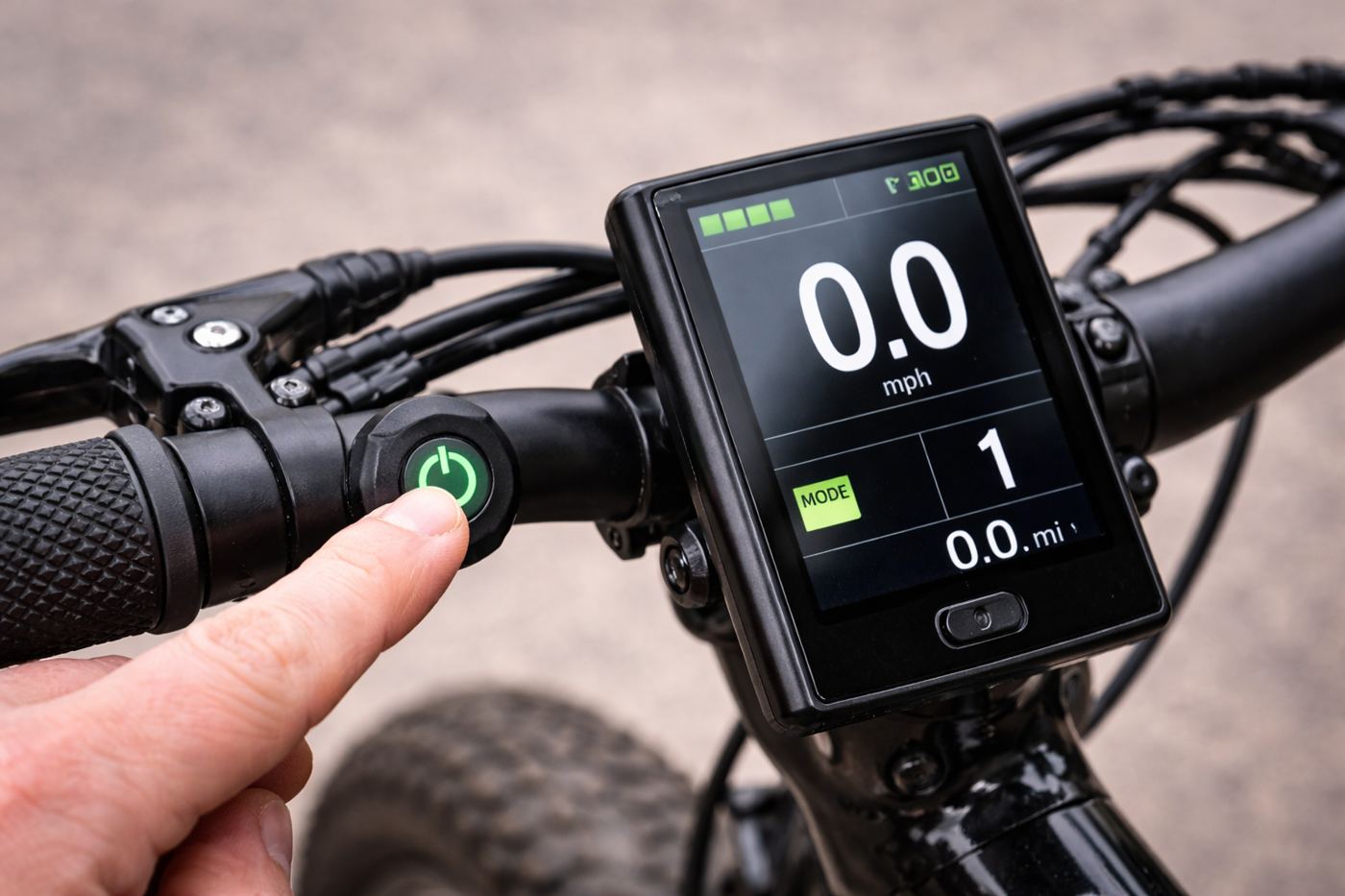
Battery charging
UK electricity tariffs
Running costs
Charging time
Economy 7
Quick answer: Charging a typical UK e-bike battery costs between 9p and 37p per full charge depending on battery size and electricity tariff. For most riders, the annual electricity bill amounts to £16–£56 — making e-bikes the cheapest powered transport option available to UK commuters on a per-mile basis.
E-Bike Battery Basics — Wh, V, and Ah Explained
- Voltage (V): The electrical pressure driving the motor. Common e-bike voltages are 36V, 48V, and 52V.
- Amp-hours (Ah): The volume of charge the battery can hold.
- Watt-hours (Wh): Total energy stored, calculated by multiplying voltage by amp-hours. This determines how much electricity your e-bike uses per charge.
The formula: Battery Capacity (Wh) = Voltage (V) × Amp-hours (Ah)
Example: 48V × 13Ah = 624 Wh • 48V × 25Ah = 1,200 Wh
How to Calculate Your Exact Charging Cost
1
Convert battery capacity to kWhDivide your battery’s Wh rating by 1,000. A 500Wh battery becomes 0.5 kWh; a 624Wh battery becomes 0.624 kWh.
2
Apply a charger efficiency multiplierNo charger transfers energy with perfect efficiency. Using 1.2 as a practical middle ground: Adjusted energy draw = Battery capacity (kWh) × 1.2
3
Multiply by your electricity tariffUsing the Ofgem price cap rate of 25.73p/kWh: a 500Wh battery costs 15.4p per full charge; a 624Wh battery costs 19.3p.
Current UK Electricity Rates and Charging Costs
The standard unit rate under the Ofgem price cap currently sits at 25.73p/kWh, with most flat-rate tariffs in 2025–2026 hovering between 25p and 28p/kWh.
| Battery Capacity | Energy Drawn (×1.2) | Cost at 25.73p/kWh | Cost at 27p/kWh |
|---|
| 300 Wh | 0.36 kWh | 9.3p | 9.7p |
| 400 Wh | 0.48 kWh | 12.4p | 13.0p |
| 500 Wh Common | 0.60 kWh | 15.4p | 16.2p |
| 624 Wh Common | 0.75 kWh | 19.3p | 20.2p |
| 750 Wh | 0.90 kWh | 23.2p | 24.3p |
| 1,200 Wh | 1.44 kWh | 37.1p | 38.9p |
Cost per mile: A 500Wh battery delivers roughly 40–60 miles of UK range. At 16p per charge, that is approximately 0.27p–0.40p per mile — compared to 12–20p per mile in fuel costs for a petrol car.
How Long Does It Take to Charge an E-Bike?
For most standard UK e-bikes, a full charge from empty takes between 3 and 6 hours.
2A — Travel / Compact
500Wh5–6 hrs
624Wh6–7 hrs
1,200Wh~12 hrs
3A — Standard (most common)
500Wh3–4 hrs
624Wh4–5 hrs
1,200Wh~8 hrs
5A — Fast Charger
500Wh~2 hrs
624Whunder 3 hrs
1,200Wh~5 hrs
Factors That Affect Your E-Bike Charging Costs
Electricity tariff and time-of-use rates
Standard flat-rate tariffs run 25–28p/kWh. Economy 7 off-peak rates drop to 17–20p/kWh between 10pm and 8am. Charging a 500Wh battery overnight at 17p/kWh costs approximately 10.2p — saving around 6p per charge.
Riding style and terrain
- High assist modes (Turbo or Boost rather than Eco)
- Hilly terrain, particularly sustained climbs
- Stop-start urban riding with repeated acceleration from standstill
- Heavy loads such as panniers, child seats, or cargo
How Often Do You Need to Charge?
| Rider Type | Weekly Mileage | Charges per Week |
|---|
| Occasional leisure rider | 10–20 miles | Once every 1–2 weeks |
| Standard commuter | 40–60 miles | 1–2 times |
| Heavy commuter / cargo user | 100+ miles | 3–5 times |
Annual and Monthly E-Bike Charging Costs
| Rider Profile | Battery | Charges / Week | Monthly Cost | Annual Cost |
|---|
| Weekend leisure rider | 500 Wh | 1 | ~67p | ~£8.00 |
| Standard commuter | 500 Wh | 2 | ~£1.34 | ~£16.00 |
| Regular commuter | 624 Wh | 3 | ~£2.51 | ~£30.10 |
| Heavy daily user | 500 Wh | 7 | ~£4.68 | ~£56.20 |
Even the most intensive scenario — charging every single day — produces an annual electricity bill of around £56. Less than a single tank of petrol in most family cars.
E-Bikes vs Cars and Public Transport
| Transport Mode | Annual Energy / Fuel Cost | Cost Per Mile | Additional Costs |
|---|
| E-bike | £8–£56 | 0.27p–0.40p | No road tax, no MOT, no mandatory insurance |
| Petrol car | ~£1,300 | 12p–20p | Insurance, road tax, MOT, servicing |
| Electric car (home charging) | ~£12.87 per 50kWh | 4p–6p | Insurance, road tax, servicing |
| London Underground | ~£3,600/yr | — | — |
Tips to Reduce Your E-Bike Charging Costs
Key habits:
- Keep charge level between 20% and 85% for daily use
- Let the battery cool for 20–30 minutes after a ride before plugging in
- Charge indoors at a moderate temperature — ideally 10°C to 20°C
- Use only the manufacturer-approved charger to avoid voltage spikes
- Charge overnight on Economy 7 to cut per-charge costs by 30–40%
Real-World Case Studies
Thomas — Daily commuter, Bristol
10 miles each way, 5 days a week
Battery500Wh
Charges per week2×
Cost per charge15.4p
£16.02 / year vs £1,200/yr bus pass
Amir — Food delivery courier, London
Full battery drain most days, Economy 7
Battery624Wh
Off-peak tariff17p/kWh
Cost per charge12.7p
£38.10 / year total charging overhead
Davies family — Cargo bike, Sheffield
School runs and shopping on hilly terrain
Battery750Wh
Cost per charge24.3p
£50.54 / year less than two tanks of petrol
Weekend trail rider — Wales
Full day on trails, once per week
Battery750Wh
Cost per charge24.3p
£12.64 / year less than a cinema ticket
The Bottom Line
Charging an E-Bike Is Measured in Pennies
A single full charge costs 9p–37p. A standard commuter’s annual electricity bill sits comfortably below £30.
- Charge overnight on Economy 7 to cut costs by 30–40%
- Keep battery between 20% and 85% charge to extend lifespan to 5–6 years
- Use Eco assist mode on flat terrain to double your range
- Service your drivetrain regularly to maintain efficient energy transfer
Need a Replacement Battery or Conversion Kit?
We stock a full range of lithium-ion e-bike batteries in 36V, 48V, 52V, and 72V — and offer in-store fitting and repair at our Cardiff workshop.
FAQ
Does charging an e-bike use a lot of electricity?
No. A typical e-bike battery holds 0.3–0.75 kWh. A standard tumble dryer consumes around 1.5 kWh per hour — you could fully charge most e-bike batteries for the energy cost of half a dryer cycle.
Can you overcharge an e-bike battery?
Modern e-bike batteries include a BMS that automatically cuts charging current at 100%. That said, it is good practice to unplug once charging is complete rather than leaving it connected indefinitely.
Is it safe to charge an e-bike overnight?
Yes, provided you use the manufacturer-approved charger and charge in a well-ventilated room away from flammable materials. Avoid charging on soft surfaces such as sofas or beds. A smoke alarm in the charging room is a sensible precaution.
Do fast chargers cost more to run?
No. A fast charger draws more watts but completes the cycle sooner. Total energy delivered in kWh is the same, so your electricity bill is unaffected.
How often do you need to charge an e-bike?
For most UK commuters covering 40–60 miles per week, once or twice a week is sufficient. A standard 500Wh battery provides 35–70 miles of real-world range depending on terrain, assist level, and rider weight.
Got a question about your battery or conversion kit? Message us on WhatsApp and we’ll give you a straight answer.