Is an eBike Conversion Kit Legal in the UK?
Guides • UK Law • Road Legal Builds Is an eBike Conversion Kit Legal in the UK? The Complete 2025 Guide By George — Qualified
This is the choice that shapes everything else. Hub motors and mid drive motors are fundamentally different systems, not just different power levels. Understanding which suits your situation is worth doing before you look at any specific kit.
| Hub motor | Mid drive | |
|---|---|---|
| Where the motor sits | Inside the rear wheel hub | At the bottom bracket, driving through the chain and gears |
| Hill climbing | Good at lower wattages; excellent at higher wattages | Excellent at all power levels — uses the bike’s gears |
| Range efficiency | Moderate — fixed ratio drive | Better — motor operates in its efficient range across terrain |
| Drivetrain wear | Low — motor doesn’t touch the drivetrain | Higher — motor power goes through chain and cassette |
| Installation complexity | Moderate — wheel and cable work | Moderate to advanced — BB removal, cable routing, programming |
| Frame compatibility | Very wide — fits almost any bike with a rear dropout | Narrower — depends on BB shell type and size |
| Ride feel | Motor push from the rear wheel | Natural pedal feel — power through the cranks |
| High-power options | Available up to 8000W | BBSHD at 1000W is the practical ceiling |
| Typical cost | Lower to moderate | Moderate to higher |
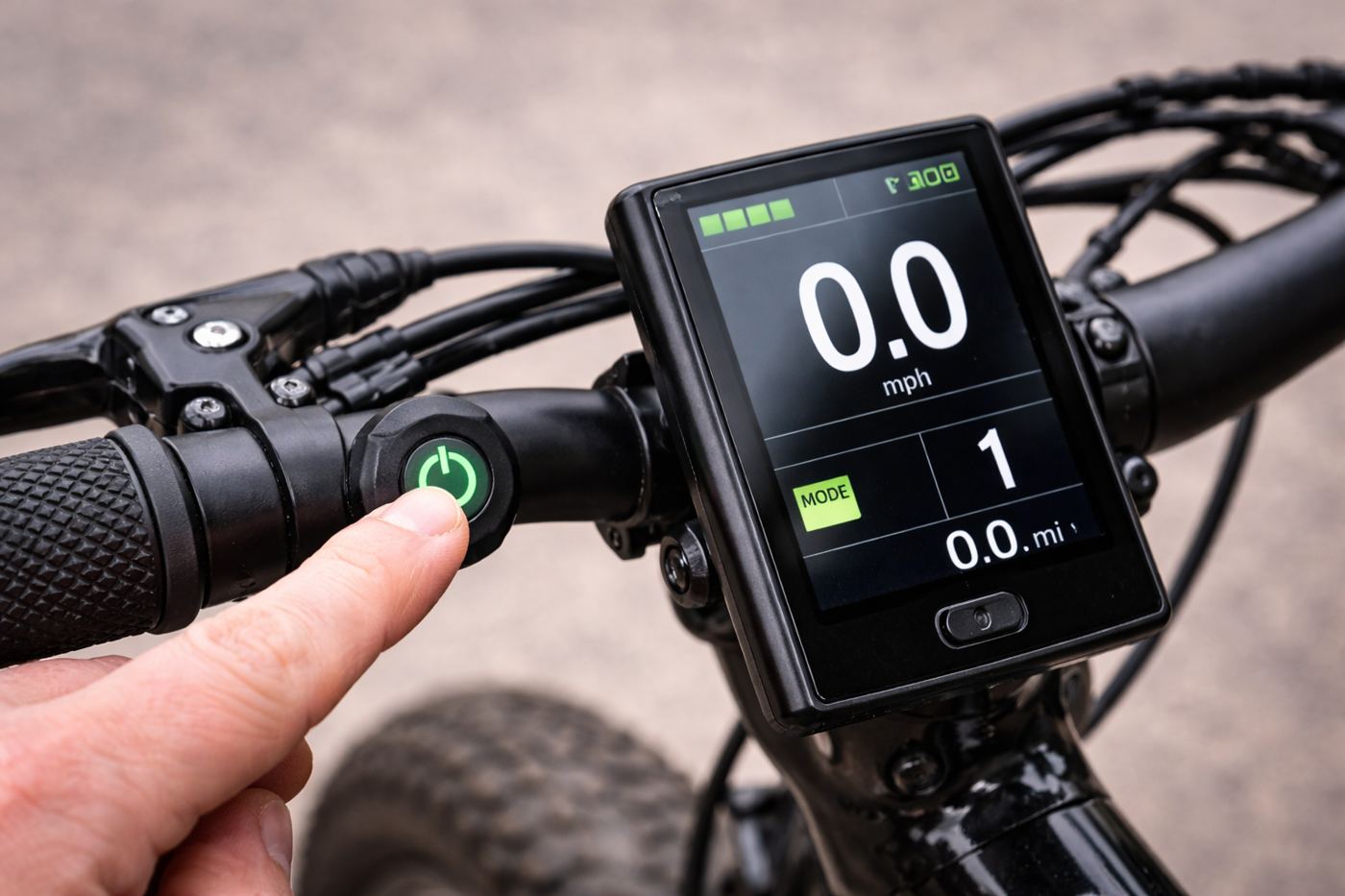
A hub motor conversion replaces your rear wheel with a motor-laced wheel. The motor drives the bike directly, independent of the gears. Installation involves fitting the new wheel, mounting the battery and controller, and connecting the display and pedal assist sensor.
We stock hub motor kits from 250W at 36V up to 8000W at 72V. Browse the full conversion kit range to see what’s in stock. The 250W kit is road-legal as configured. Everything above 250W is for off-road and private land use only.
A mid drive motor replaces your bottom bracket and drives through the bike’s existing chain and gears. This means the motor benefits from your cassette on hills — in a low gear on a steep climb, the motor works less hard to move you at the same speed, in the same way your legs do.
The most popular mid drive conversion at our workshop is the Bafang BBS02B, fitted on everything from steel commuter hybrids to aluminium hardtails. For the vast majority of UK riders, it offers the best balance of performance, road legality, and long-term reliability. See our full Bafang mid drive guide for a detailed comparison of BBS01B, BBS02B, and BBSHD.
Wattage is the most misunderstood spec in the eBike conversion market. Here is what the numbers actually mean in practice.
| Wattage | Real-world performance | Road legal in UK? | Typical use case |
|---|---|---|---|
| 250W | Solid assist on flat to moderate terrain. Feels like strong tailwind. Struggles on sustained steep gradients with heavier riders. | ✓ Yes (if PAS only, 25 km/h cutoff) | Urban commuting, flat routes |
| 500W–750W | Noticeably more torque. Handles hilly routes comfortably. Mid drive at 750W programmed to 250W continuous remains road-legal. | ⚠ Requires programming for road use | Hilly commuting, mixed terrain |
| 1000W–1500W | Strong performance. Hub motors at this power are off-road only. Mid drive (BBSHD) can be programmed for road legality. | ✗ Off-road only (hub motors) / ⚠ Programmable (BBSHD) | Off-road, cargo, demanding builds |
| 2000W–8000W | High-performance off-road and private land use. Not road-legal by design. | ✗ Off-road and private land only | Trail riding, private land, speed builds |
A converted eBike is road-legal in the UK as an EAPC (Electrically Assisted Pedal Cycle) provided three conditions are met: maximum 250W continuous output, pedal assist only, and speed cutoff at 15.5 mph (25 km/h). A bike that doesn’t meet these conditions is legally a motor vehicle — requiring a licence, registration, MOT, and insurance.
For a full breakdown of the rules, including which kits can and cannot be made road-legal: see our complete UK eBike legality guide.
The battery is as important as the motor. An undersized battery limits performance, range, and motor longevity. An oversized battery adds unnecessary weight and cost. You can browse the full eBike battery range to see all voltage and capacity options. Here is how to match them correctly.
Most hub motor kits and the Bafang BBS range run on 36V, 48V, or 52V. The motor and battery must match voltage. A 48V motor requires a 48V battery. Running the wrong voltage damages the controller.
As a rough guide: 10Ah at 48V (480Wh) gives approximately 25–40 miles of assisted range, depending on terrain, rider weight, and assist level. A 17.5Ah battery (840Wh) gives approximately 45–65 miles. Hillier terrain and heavier riders reduce range; flatter routes and lighter assist extend it.
Downtube batteries mount to bottle-cage bosses and are the easiest to remove for charging. Triangle batteries sit inside the main frame triangle for better weight distribution and higher capacity. Rear rack batteries suit step-through and utility bikes. Check your frame before choosing — not all styles fit all bikes.
High-wattage motor kits (1500W and above) draw high current under load. Your battery must be rated to supply it. A battery with a low discharge rate will sag in voltage under load, reducing performance and battery life. For 1500W+ builds, look for batteries with a continuous discharge rating of at least 30A.
| Motor type | Voltage | Minimum capacity | Recommended capacity |
|---|---|---|---|
| Hub motor 250W | 36V | 10Ah (360Wh) | 13Ah (468Wh) |
| Hub motor 500W–1000W | 48V | 13Ah (624Wh) | 17.5Ah (840Wh) |
| Hub motor 1500W–3000W | 48V or 72V | 17.5Ah (840Wh) | 20Ah (960Wh+) |
| Bafang BBS01B | 36V or 48V | 10Ah | 13–17.5Ah |
| Bafang BBS02B | 48V (52V for performance) | 13Ah | 17.5Ah |
| Bafang BBSHD | 48V or 52V | 17.5Ah | 20Ah |
Before buying any kit, run through this checklist for your specific frame.
Most standard bikes have a 135mm or 142mm rear dropout width. Check your bike’s dropout spacing matches the motor wheel you are buying. Most hub motor kits are supplied for 135mm dropouts — 142mm thru-axle frames require a different wheel build or an adapter.
Bafang mid drives require a threaded English (BSA) bottom bracket shell. BBS01B and BBS02B need 68mm or 73mm width. BBSHD needs 100mm. Press-fit shells (PF30, BB86, BB92) and threaded non-BSA shells (Italian, BB30) are not directly compatible.
Does your frame have bottle cage bosses on the downtube for a downtube battery? Does the main triangle have enough clearance for a triangle battery? Measure the internal dimensions of the triangle and compare with the battery specs before ordering.
External cable routing (cables running on the outside of the frame) makes installation straightforward. Internal routing (cables inside the frame tubes) is possible but adds significant complexity. Factor this into your DIY vs workshop decision.
Hub motor wheels are pre-built to specific sizes. Confirm your bike’s wheel size (26”, 27.5”, 700c / 29”) and ensure the kit matches. Fat tyre bikes (4” tyres) require specific wider-hub motor variants.
Hub motor 250W 36V + 36V 13Ah downtube battery. Simple, affordable, road-legal out of the box. Best for flat to mildly undulating routes under 15 miles each way.
Bafang BBS02B 750W + 48V 17.5Ah downtube battery, programmed to EAPC spec. The right answer for most South Wales riders. Handles any gradient, road-legal when set up correctly, and a comfortable 40–55 mile range.
Hub motor 1500W–3000W + 48V or 72V triangle battery, or Bafang BBSHD + 52V triangle battery. Which is right depends on your frame. BBSHD for bikes with 100mm BSA shell; hub motor for everything else. Both are off-road and private land only.
Hub motor 1500W–2000W for rear-drive torque, or Bafang BBSHD on a compatible frame. Both handle sustained heavy loads. Hub motor is simpler; BBSHD uses the gears for greater efficiency on varied terrain.
Message us on WhatsApp before you order. Send us your frame make and model, your intended use, and how far you ride. We’ll give you a straight recommendation in minutes. We do not benefit from recommending a more expensive kit if a simpler one is genuinely the right answer.
Not sure which kit suits your bike and riding style? Message George on WhatsApp with your frame details and a description of your typical ride — we’ll give you a direct recommendation.
Guides • UK Law • Road Legal Builds Is an eBike Conversion Kit Legal in the UK? The Complete 2025 Guide By George — Qualified
Best electric bikes for seniors UK 2026: top 5 lightweight step-through models reviewed, hub vs mid-drive motors explained, weight guide and what to look for.


Your ebike professionals!
2 Beresford Road Lane
Cardiff
UK
CF24 1QU

Welcome to ALL4EBIKES!
Typically replies within minutes
WhatsApp Us
🟢 Online | Privacy policy
WhatsApp us